
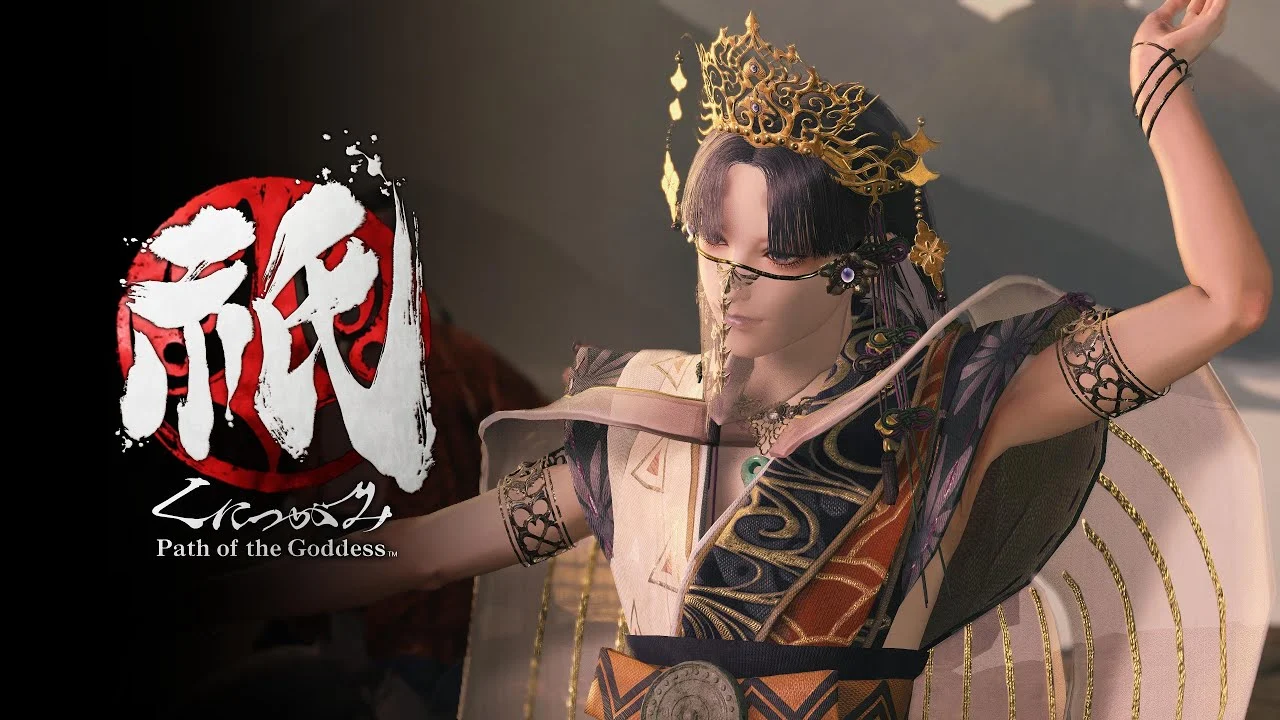
Kunitsu-Gami: Path of the Goddess has always been officially described by Capcom as a Kagura Action Strategy game, but its connection to kagura can be read much more deeply than sword animations, costumes, masks and music. A September 6, 2026 Game*Spark feature compares the structure of an individual stage with dramatic patterns found in Geihoku Kagura.
That connection is particularly visible in the game's rhythm. Daytime is spent purifying villages, rescuing residents, assigning roles and establishing Yoshiro's path, while night transforms the same stage into a confrontation in which Soh and the villagers defend her from the Seethe. Preparation, threat, confrontation, combat and restoration create an interesting parallel with kagura performance structure in Hiroshima.
Quick Summary
- Game: Kunitsu-Gami: Path of the Goddess
- Japanese title: 祇(くにつがみ):Path of the Goddess
- Developer: CAPCOM
- Publisher: CAPCOM
- Official genre: Kagura Action Strategy
- Format: single-player
- Original release: July 19, 2024 according to Capcom's official product information
- Steam: store currently displays July 18, 2024
- Nintendo Switch 2: June 5, 2025
- Platform: PlayStation 5
- Platform: PlayStation 4
- Platform: Xbox Series X|S
- Platform: Xbox One
- Platform: PC / Steam / Windows
- Platform: Nintendo Switch 2
- Protagonist: Soh / 宗
- Maiden: Yoshiro / 世代
- Location: Mt. Kafuku / 禍福山
- Enemies: the Seethe / 畏哭
- Main goal: cleanse the mountain of defilement
- Core cycle: day and night
- Day: exploration and preparation
- Day: purifying defilement
- Day: rescuing villagers
- Day: assigning roles to villagers
- Day: creating Yoshiro's path toward the Torii
- Night: the Seethe emerge from gates to another world
- Night: Soh fights directly
- Night: villagers are commanded to defend positions
- Priority: protect Yoshiro
- Soh's action: dance-like sword action / sword dance
- Yoshiro's role: performs kagura to purify the Torii
- Official cultural element: kagura
- Official cultural element: masks
- Official cultural element: Japanese-inspired music
- Game*Spark interpretation: stage structure resembles kagura performance
- Primary cultural reference: Geihoku / Aki-Takata Kagura
- Five Geihoku Kagura sections: michiyuki
- Five Geihoku Kagura sections: saguri
- Five Geihoku Kagura sections: karami
- Five Geihoku Kagura sections: tachi-ai
- Five Geihoku Kagura sections: ureshimai
- Michiyuki: travel and character introduction
- Saguri: arrival and display of the antagonist
- Karami: confrontation between good and opposing sides
- Tachi-ai: battle sequence
- Ureshimai: victory dance after the enemy is defeated
- Famous kagura antagonist: Yamata-no-Orochi
- Famous kagura antagonist: Tsuchigumo
- Famous kagura antagonist: Shuten-doji
- Important distinction: those names are not confirmed names for the game's Seethe
- Developer description of Seethe: designs draw on yokai motifs
- Seethe names: created specifically for Kunitsu-Gami
- Nintendo Switch 2: supports mouse controls
- Additional content: Otherworldly Venture
- Otherworldly Venture: available as a free update
- Demo: available through Steam
- Current status: released across all announced platforms
Kagura, Gameplay and the World of Kunitsu-Gami
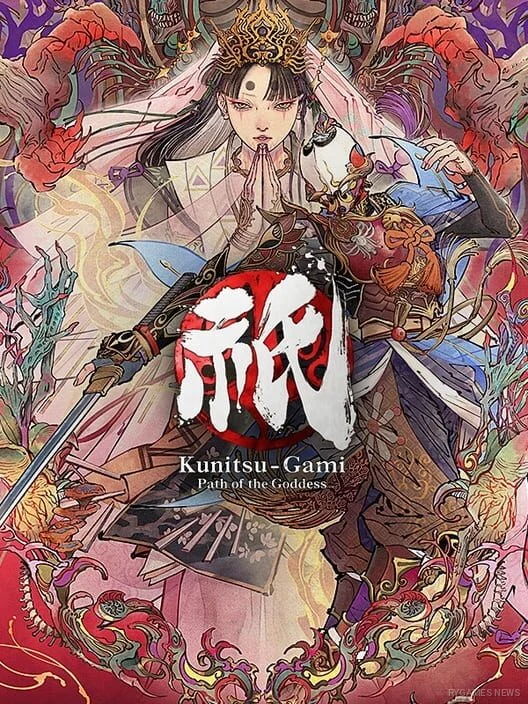
The Day-Night Cycle Has the Rhythm of a Staged Performance
Kunitsu-Gami does not treat action and strategy as completely separate modes. Both are arranged around a continuously repeating stage cycle.
During the day, Soh explores areas covered in defilement, cleanses the environment, rescues villagers, assigns their roles and determines the route Yoshiro will take toward the Torii.
When the sun sets, the rhythm changes. The gates become entry points for the Seethe, and players must defend Yoshiro while directly controlling Soh and issuing orders to villagers.
Game*Spark reads that sequence through the lens of kagura: the opening phase establishes the situation and prepares the stage, while night becomes the point at which protagonist and antagonist finally collide.
This does not mean Capcom literally copied the structure of one specific kagura performance, but the similarity adds useful context to the game's official “Kagura Action Strategy” identity.
Five Geihoku Kagura Sections Build a Story From Journey to Victory
Hiroshima Kagura's guide explains that many Geihoku Kagura stories built around conflicts between good and evil can broadly be understood through five major sections.
Michiyuki establishes a character's journey. A warrior or protagonist enters, identifies themselves and explains the purpose of their travel.
Saguri gives the oni or antagonist its entrance, with movement and presentation designed to establish danger.
Karami brings the two sides together for confrontation, often through dialogue and challenges before physical combat begins.
Tachi-ai is the battle climax where good and evil directly clash.
Finally, ureshimai expresses the joy of victory after the opponent has been defeated.
Game*Spark compares this overall rhythm with Kunitsu-Gami, particularly its daytime preparation and journey followed by nighttime confrontation and combat.
Kagura Is More Than Dance—It Is Ritual and Shared Entertainment
In the Aki-Takata context, kagura has roots as a performance offered to deities while also being enjoyed by the community.
Kagura Monzen Toji Village describes the idea of shinjin waraku, a state in which gods and humans enjoy kagura together. Over time, the tradition developed into public entertainment featuring vivid costumes, expressive masks, hayashi music, dialogue, stories and action sequences.
The ritual side includes movement intended to purify the space and welcome divine presence. Nōmai, meanwhile, provides more theatrical stories that can feature heroes, oni, monsters and villains.
That helps explain Game*Spark's comparison to a “hero show”: audiences can identify the hero, recognize the threat, wait for both sides to confront one another and enjoy the major battle as the climax.
The five-part structure discussed here is primarily associated with Geihoku/Aki-Takata Kagura. Japan contains many kagura traditions, and they should not all be assumed to follow the same structure.
Soh's Sword Dance and Yoshiro's Kagura Turn the Theme Into Mechanics
The kagura connection is most visible through the game's two central characters.
Soh fights through attack sequences intentionally presented as a sword dance. Capcom describes his combat as dance-like sword action rather than conventional hack-and-slash animation alone.
Yoshiro, meanwhile, is not simply an escort target that must reach a destination. She advances toward the Torii while dancing and ultimately performs the purification ritual.
Dance therefore becomes part of the core game system. Soh uses dance-like movements to defeat the Seethe, while Yoshiro uses kagura to carry out purification.
Masks also have mechanical meaning. Rescued villagers can receive roles through masks, connecting another traditional visual element directly to the strategy layer.
The result is an unusual combination in which performing-arts influences extend beyond art direction into animation, stage structure, role assignment and battle objectives.


Yamata-no-Orochi and Shuten-doji Are Not Official Seethe Names
One part of the cultural comparison needs a clear distinction: the relationship between Kunitsu-Gami's monsters and famous kagura antagonists.
Game*Spark mentions Yamata-no-Orochi, Tsuchigumo and Shuten-doji as familiar villain figures in kagura performances and events such as Kagura Koshien.
That does not mean those figures are confirmed boss or Seethe names in Kunitsu-Gami.
In an earlier developer interview, the team explained that the Seethe do have yokai motifs, but their actual names were created specifically for the game.
The safest way to understand the connection is therefore as visual, thematic and dramaturgical rather than a one-to-one identification between each game monster and a specific folkloric figure unless Capcom explicitly states otherwise.
That distinction keeps the cultural interpretation from turning into an unsupported lore claim.
Switch 2 Added Mouse Controls and Otherworldly Venture
Kunitsu-Gami originally launched in 2024 for PlayStation, Xbox, Windows and Steam.
Capcom later brought the game to Nintendo Switch 2 on June 5, 2025, alongside the launch of the hardware.
The Switch 2 release supports mouse controls, giving players an additional interface for selecting, placing and directing villagers in a way closer to PC strategy controls.
Around the same period, Capcom also introduced Otherworldly Venture, extra content focused on action-and-strategy challenges. The mode was made available through a free update.
Game*Spark's September 2026 feature therefore arrives after the Switch 2 edition and additional content, but the original fusion of action, purification ritual and kagura remains the game's defining idea.
Why This Matters
1) Art direction and gameplay speak the same cultural language
Kagura is not limited to costumes or music. Journey, purification, dance, confrontation and battle also influence the way the game itself is structured.
2) Each stage feels like a drama with an opening and climax
Daytime builds the situation and gives players time to prepare, while night introduces the threat and battle, creating a clear dramatic rhythm.
3) The monsters remain original creations
Yokai motifs connect the game to Japanese tradition without simply turning famous folkloric names into a boss checklist.
4) The game can become an entry point for understanding kagura
Once the player understands why Soh “dances” while fighting or why Yoshiro purifies a Torii through kagura, many of the game's design decisions become easier to read.
Game and Kagura Context
For now, the additional important information currently known includes:
- Kunitsu-Gami is an original CAPCOM IP
- the Japanese title is 祇(くにつがみ):Path of the Goddess
- Capcom officially classifies it as Kagura Action Strategy
- it is designed as a single-player game
- Soh serves as Yoshiro's guardian
- Yoshiro is the Maiden capable of purification
- Mt. Kafuku has been covered in defilement
- the Seethe emerge at night
- players must protect Yoshiro so purification can be completed
- gameplay follows a day-and-night cycle
- rescued villagers can be assigned roles
- those roles are connected to masks
- villager positioning can be changed to suit battle conditions
- Soh can fight directly while still commanding villagers
- Soh's sword attacks are presented as dance-like movement
- Yoshiro advances toward the Torii while performing kagura
- Steam categorizes the game under Action and Strategy
- a Steam demo is available
- Japanese full audio is supported
- English full audio is supported
- Steam lists 13 supported interface/subtitle language combinations
- the original game launched in July 2024
- the Nintendo Switch 2 edition launched June 5, 2025
- the Switch 2 edition supports mouse controls
- Otherworldly Venture is additional content
- Otherworldly Venture was released through a free update
- Game*Spark published the latest cultural feature on September 6, 2026
- that feature uses Aki-Takata / Hiroshima Kagura as cultural context
- Geihoku Kagura commonly uses michiyuki, saguri, karami, tachi-ai and ureshimai
- that five-part format is not a universal rule for every Japanese kagura tradition
- michiyuki covers travel or the protagonist's entrance
- saguri presents the antagonist
- karami creates the confrontation between hero and villain
- tachi-ai is the combat sequence
- ureshimai is the victory sequence
- Aki-Takata Kagura retains a strong tradition of performance for both deities and the community
- shinjin waraku describes gods and people enjoying kagura together
- Yamata-no-Orochi is a well-known kagura story
- Tsuchigumo is also a common antagonist
- Shuten-doji appears in stories such as Oeyama
- none of those names are confirmed as names for Kunitsu-Gami's Seethe
- developers have described the Seethe as drawing from yokai motifs
- the Seethe's names were created specifically for the game
- official game information is available through the Official Website
- official updates are available through Official X
- official gameplay footage is available through the Official Gameplay Overview
- the PC version is available through Steam
- Switch 2 information is available through the Nintendo Switch 2 Official Store
Closing
Kunitsu-Gami: Path of the Goddess becomes easier to understand once kagura is viewed as more than a visual theme. Preparation, Yoshiro's journey, the emergence of the Seethe, nighttime confrontation, Soh's sword dance and purification together form a structure that strongly resonates with Geihoku Kagura dramaturgy.
That comparison should still be treated as cultural context rather than a one-to-one lore mapping. The Seethe are original Capcom monsters despite their yokai motifs, while Yamata-no-Orochi, Tsuchigumo and Shuten-doji are examples of famous kagura antagonists that help explain the performance language surrounding the game.
- Game*Spark — September 6, 2026 Feature Comparing Kunitsu-Gami Stage Flow with Kagura Performance Structure
- Hiroshima Kagura — Official Geihoku Kagura Guide Explaining Five-Part Scene Structure and Character Types
- CAPCOM — Official Kunitsu-Gami Game Website and Product Information
- CAPCOM — Official Nintendo Switch 2 Release, Mouse Controls, Platforms, and Otherworldly Venture Information
- Steam — Official Store Page, Day-Night Gameplay Loop, Languages, and PC Features
- CapcomChannel / YouTube — Official Kunitsu-Gami Gameplay Overview Video
- Kagura Monzen Toji Village / YouTube — Aki-Takata Kagura Tokyo Performance of Yamata-no-Orochi
- Gamer — Developer Interview Discussing Yokai Motifs and Original Naming of the Seethe