
Tiny Eden will launch for PC through Steam on September 7, 2026. The first-person farming simulation is developed by Bajka Games and published by Digital Vortex Entertainment.
Instead of giving players an open field, Tiny Eden places its entire growing operation inside an apartment in a futuristic megacity. A small packet of seeds begins the transformation of an empty concrete home into an indoor garden that can eventually extend to the rooftop.
Quick Summary
- Official title: Tiny Eden
- Format: PC game
- Genres: farming simulation, life simulation, management, casual, and cozy
- Perspective: first-person
- Release date: September 7, 2026
- Platform: Windows PC through Steam
- Developer: Bajka Games
- Publisher: Digital Vortex Entertainment
- Players: single-player
- Free demo: available through Steam
- Setting: an apartment in a futuristic megacity
- Starting point: one packet of seeds and a pot by the window
- Expansion goal: grow from a windowsill garden to a rooftop space
- Plant categories: flowers, berries, vegetables, and herbs
- Plant systems: individual growth stages and soil-chemistry simulation
- Core activities: planting, watering, fertilizing, harvesting, cooking, and selling
- Processed goods: fresh meals, baked food, jams, pickles, and other recipes
- Sales: crops and prepared products can be sold at the market or to neighbours
- Progression: purchase seeds, containers, equipment, recipes, decorations, and upgrades
- Automation: available as the growing operation expands
- Customization: dozens of interior items
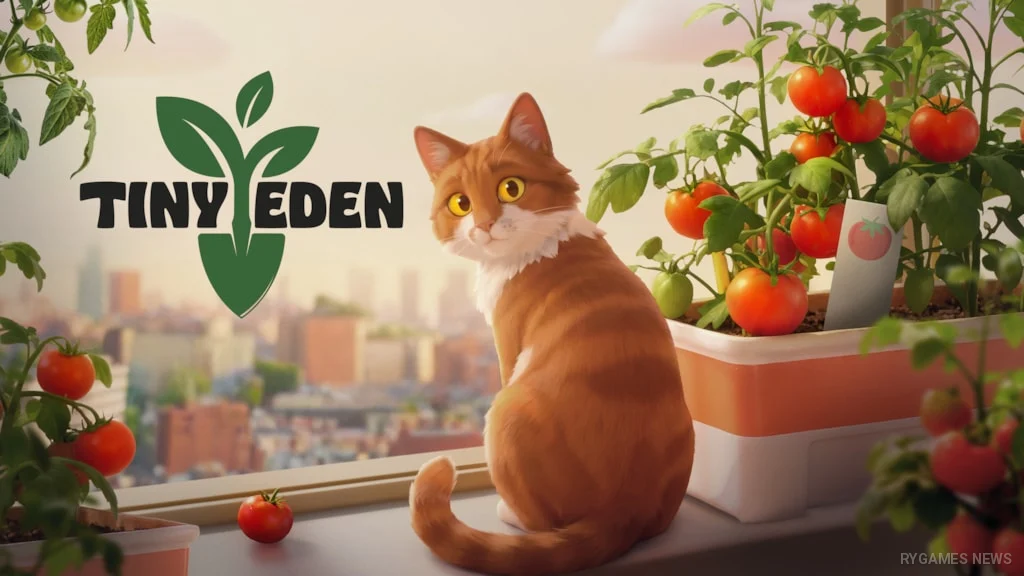
- Pet: a cat can share the apartment
- Interface languages: English, Russian, French, German, Spanish, Brazilian Portuguese, Japanese, and Simplified Chinese
- Indonesian support: not currently available
- Price: not yet announced
- Age rating: not currently listed
- Console versions: not announced
- Minimum storage: 2 GB
- Minimum operating system: 64-bit Windows 10
- Minimum memory: 4 GB RAM
- Listed minimum GPU: NVIDIA GeForce RTX 2070
Release Trailer, Steam, and Key Art
One Pot Changes an Empty Apartment
The game begins inside a small apartment surrounded by concrete, glass, and the grey skyline of a vast city. That routine changes when a simple packet of seeds arrives at the player's door.
The first seeds are planted in a pot by the window. From there, players learn the needs of each species, prepare soil, manage water, and watch every plant move from seed to sprout and finally to harvest.
The garden does not immediately occupy the entire apartment. It expands gradually as players earn money and purchase additional pots, shelves, equipment, and production space.
Progress can eventually carry the garden beyond the living room and onto the rooftop, creating a large green space above the surrounding megacity.
Plants Have Individual Soil and Growth Requirements
Tiny Eden does not treat every crop as an identical timer. Flowers, vegetables, berries, and herbs have different requirements and move through their own visible growth stages.
The soil system asks players to consider composition, drainage, water retention, and available nutrients. Preparing a suitable mixture supports healthy growth, while poor management can limit the final harvest.
Container size and plant placement also affect the root systems. Compatible species can share nearby space without competing for the same resources, while unsuitable combinations may reduce the productivity of both plants.
These systems add management without turning every session into a race. Players can continue tending their garden slowly and observe how the apartment changes over time.
Crops Can Be Cooked or Sold to Neighbours
Mature plants can be sold directly or carried into the kitchen. Players unlock recipes, combine ingredients, and turn their home-grown produce into prepared food.
Available products include fresh meals, baked goods, jams, pickles, and other homemade items. They can be sold for additional profit or used to complete orders from people living nearby.
The resulting income returns to the apartment. New seed varieties, cooking devices, containers, production equipment, decorations, and upgrades allow the operation to keep expanding.
Automation systems become available as the number of plants grows. They reduce some repetitive work while leaving the garden layout and business direction under the player's control.
The Apartment Can Be a Home or a Production Garden
Dozens of interior items allow the apartment to develop its own visual identity. Players can build a comfortable home filled with greenery or arrange a cleaner and more efficient vertical-growing station.
Plants are not treated only as products. Pots, shelving, lights, furniture, and decorations determine how the home feels as well as how the garden functions.
The same room can therefore support different approaches. One player may pursue large harvests, while another keeps a smaller garden focused on visual comfort and personal routines.
A cat can also live in the apartment. Furniture placement and available green space consequently shape the atmosphere for both the player and their pet.

Small Daily Rituals Form the Core Experience
Bajka Games designed Tiny Eden around simple repeated actions: planting, watering, observing growth, harvesting, and rearranging the home.
Bajka Games CEO Aliaksandr Piskun has described the concept as emerging from the calm he found in caring for plants. The aim is to give players a place to slow down and pay attention to processes that do not constantly demand major decisions.
Tiny Eden still contains economic and management progression beneath its relaxed presentation. Players choose which crops to grow, what products to sell, which equipment to buy, and which part of the apartment should be expanded first.
A free Steam demo is already available, allowing players to try the basic cultivation loop before the complete release.
Why This Matters
1) Farming takes place entirely inside an apartment
Players are not given a large outdoor property. The garden must use windows, corners, shelves, containers, and eventually the rooftop of a city building.
2) Soil is part of plant management
Growing involves more than placing a seed and waiting. The medium and the needs of each species affect whether the plant develops successfully.
3) Every harvest has several possible uses
Produce can be sold raw, turned into higher-value food, or used to complete requests from neighbours.
4) Decoration and productivity can coexist
The apartment may become a comfortable home, an organized production garden, or a personal combination of both approaches.
Game Information
The important details currently known are:
- Tiny Eden is a first-person farming simulation set in a futuristic megacity
- Bajka Games is developing the title
- Digital Vortex Entertainment is publishing it
- the full version is scheduled for September 7, 2026
- the announced platform is Windows PC through Steam
- a free demo is currently available
- the garden begins with one pot beside the apartment window
- players can grow flowers, berries, vegetables, and herbs
- each plant has individual growth stages and requirements
- soil management includes composition and nutrients
- harvested produce can be sold or processed in the kitchen
- prepared food can be used to fulfil orders from neighbours
- income purchases plants, equipment, recipes, decorations, and upgrades
- automation becomes available as the garden expands
- dozens of interior items can be used to decorate the apartment
- the growing space can eventually reach the rooftop
- only single-player has been listed
- Indonesian is not included among the eight supported interface languages
- pricing and an age rating have not been announced
- PlayStation, Xbox, and Nintendo versions have not been announced
- product details are available through the official Tiny Eden Steam page
- publisher information is available through the official Digital Vortex Entertainment website
Closing
Tiny Eden moves the farming-simulation loop from an open field into a limited living space. One windowsill pot can become a garden filling the apartment, supporting a home kitchen, generating income, and eventually reaching the rooftop.
The PC version will launch through Steam on September 7, 2026. Its free demo is already available, while pricing, an age rating, and possible console editions remain unannounced.
- GamesPress — September 7 PC Release Date, Indoor Farming Features, and Developer Statement
- Steam — Official Store Page, Gameplay Features, Languages, and System Requirements
- Steam News — September 7 Launch Announcement and New Trailer
- YouTube — Tiny Eden Official Release Date Trailer
- Digital Vortex Entertainment — Official Publisher and Tiny Eden Portfolio Page
- Steam — Official Tiny Eden Free Demo
- Official X — Tiny Eden Development Updates and Steam Demo Information